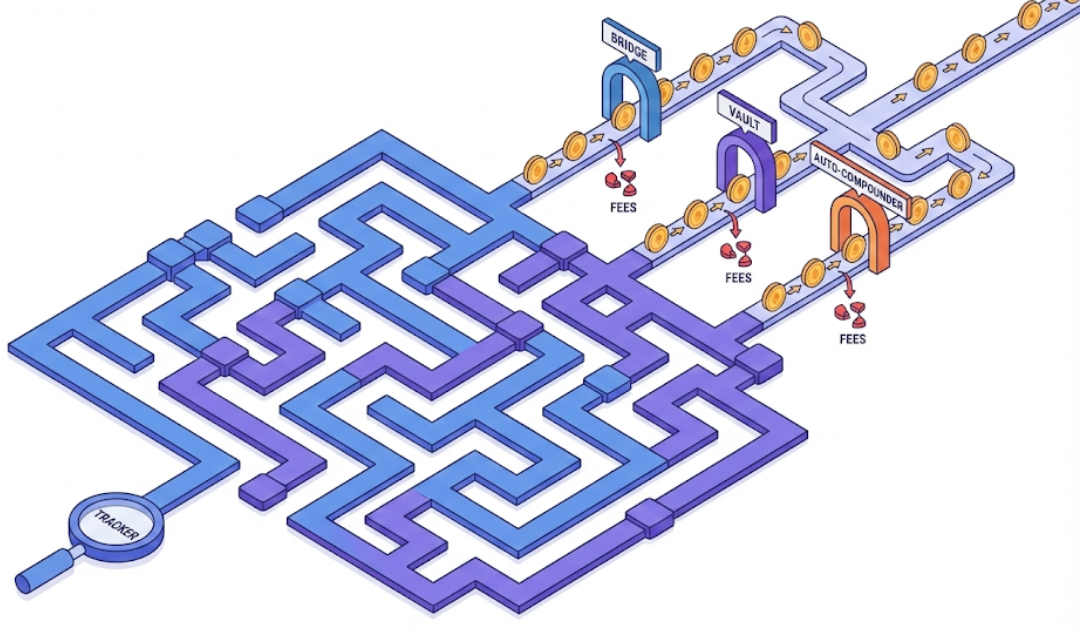
Common mistakes in tracking DeFi investments include relying on one dashboard, ignoring fees, and confusing APY with real profit. Multi-chain moves, liquidity pools, and price distortions often make returns look higher than they are. Accurate tracking requires following transactions, costs, and real realized gains.
Common mistakes in tracking DeFi investments are the main reason why many crypto investors feel profitable on paper but struggle to prove it in reality. DeFi is not like traditional investing or even CeFi.
Your portfolio isn’t sitting in one place. It moves across wallets, chains, liquidity pools, vaults, bridges, and Layer 2s. On top of that, gas fees, slippage, and complex yield mechanics constantly change your real returns. So it’s easy to think you’re winning while your actual ROI quietly tells a different story. And the impact isn’t limited to mismatched numbers on a dashboard, when tracking is inaccurate, your tax calculations can be wrong too, with overstated gains, missed losses, and broken cost basis creating serious complications during tax filing in complex, multi-chain DeFi portfolios.
Advanced DeFi users often interact with multiple protocols and chains, which makes accurate DeFi portfolio tracking extremely difficult. Read our guide on tracking DeFi portfolio across multiple wallets and blockchains. Research shows that DeFi protocols are highly composable and interconnected, meaning users frequently engage with several protocols and layered financial services within a single ecosystem.
If you’ve ever wondered why your returns don’t match your tracker, you’re not alone. This guide breaks down what goes wrong in DeFi investment tracking, why it breaks, and how to fix it with practical frameworks and smarter tracking methods.
What Are the Core Mistakes People Make in DeFi Investment Tracking?
Most mistakes in DeFi investment tracking happen because people trust apps more than understanding what’s actually happening to their money. They see numbers on a screen and assume they’re accurate. But in DeFi, those numbers often tell only half the story.
1. Visibility Blindness
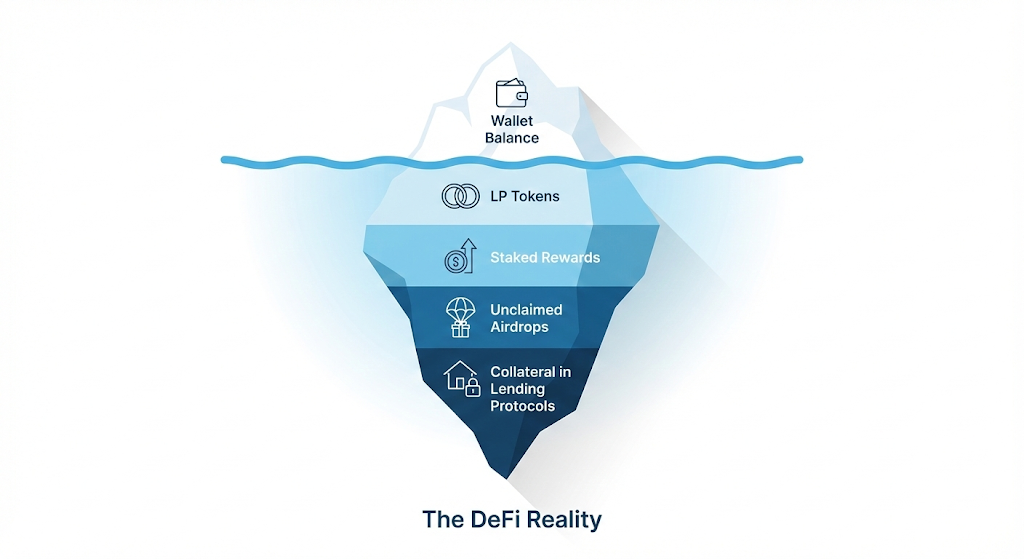
Most investors believe their portfolio tracker shows all their assets. It doesn’t. Some positions are hidden or shown incorrectly, especially when money is locked in pools, staking, or complex strategies.
Technically, this happens because many DeFi positions aren’t simple tokens. LP tokens, vault shares, and staking derivatives are smart-contract representations, not regular assets. When protocols upgrade contracts or move liquidity (for example, from V1 to V2 pools), trackers often fail to decode them properly. So funds that look “lost” are usually just transformed or relocated, making this one of the most common DeFi tracking mistakes.
2. Valuation Illusion
Portfolio trackers often rely on last traded prices, oracles, or small liquidity pools. When a token has low trading volume, even a tiny trade can inflate its price on paper. So your tracker shows high value, but you can’t actually sell at that price.
Wrapped and bridged tokens add more distortion. Trackers may treat them as equal across chains, even when liquidity differs. As a result, portfolio values look higher than real returns, which is why DeFi portfolio tracking often feels inaccurate.
3. Confusing APY with Real Profit
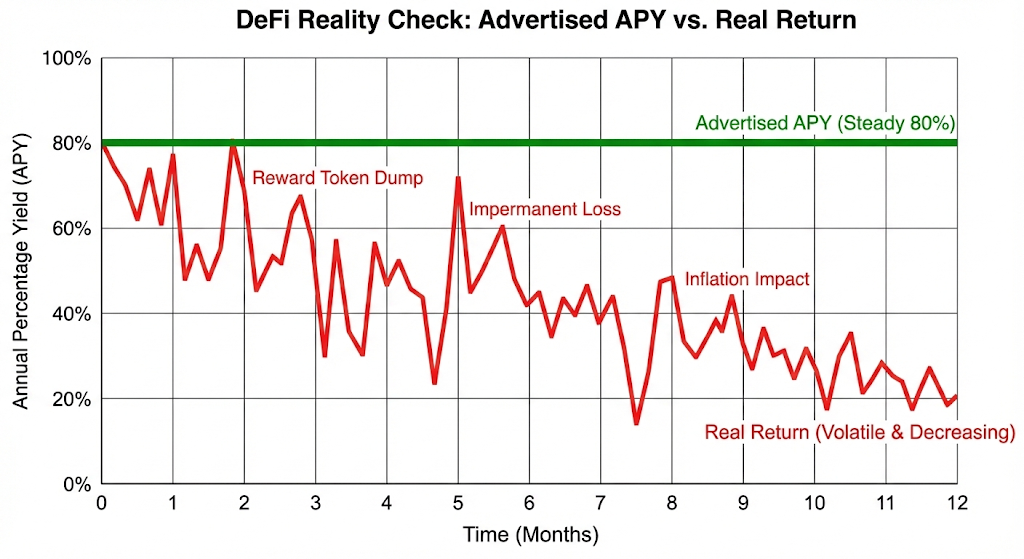
APY assumes constant prices, continuous compounding, and stable rewards. In reality, none of these stay fixed. If a pool shows 80% APY, it’s calculated using current reward rates and token prices, not what you’ll actually earn over time.
For example, you earn rewards in a volatile token. If its price drops by 40%, your “high APY” turns into a real loss. Add gas fees and slippage when claiming rewards, and profits shrink further. So APY looks impressive on dashboards, but real returns often tell a very different story.
4. Ignoring Small Costs That Add Up
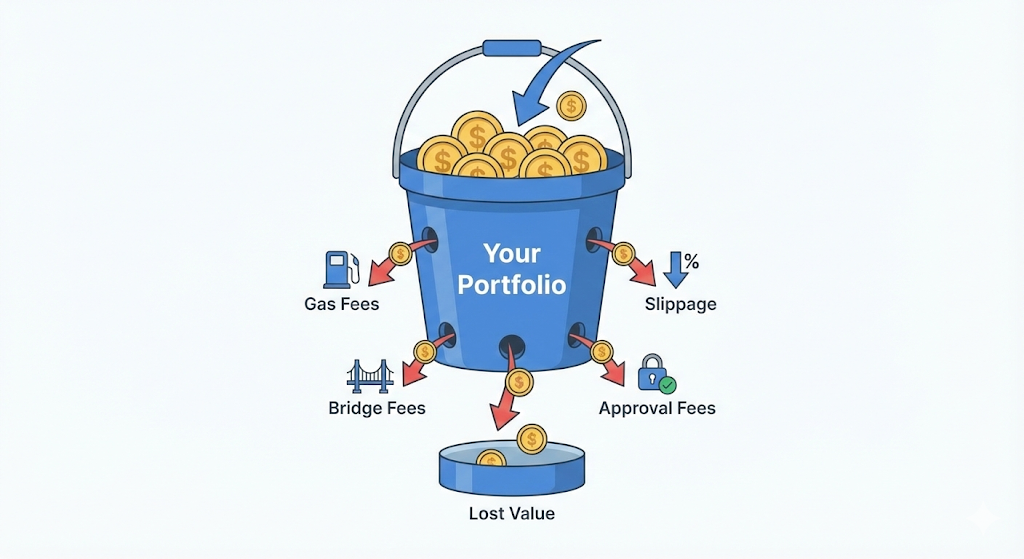
Most investors track profits but ignore fees. Transaction costs, trading losses, and bridge fees quietly reduce returns.
When these costs aren’t tracked, portfolios show “fake profits.” That’s why DeFi performance tracking often looks better than reality. For example, you earn $200 in rewards but spend $120 on gas, slippage, and bridge fees. Your tracker shows profit, but your real gain is almost gone.
5. Not Understanding Where Gains Come From
Many people treat all gains as the same. But price increases, rewards, and bonuses come from very different sources.
For example, a token’s price may rise while yield rewards fall, or an airdrop may inflate returns without real strategy success.
Mixing them together makes it hard to judge whether a strategy actually works and creates errors in performance analysis and tax calculations.
6. Using Oversimplified Tracking Habits
Relying on one app. Forgetting multiple wallets. Ignoring losses in liquidity pools. Treating advertised returns as guaranteed.
For example, one tracker may miss bridged assets, while another wallet hides losses from impermanent loss or failed trades.
These habits create systematic crypto portfolio tracking mistakes. They’re not technical problems. They’re mindset and process problems.
7. Missing the Big Picture Across Chains
Many investors use multiple networks like Ethereum, Arbitrum, and Polygon, but tracking tools often treat them separately.
When money moves between networks, the original purchase price can disappear and fees get misreported or ignored.
For example, ETH bridged from Ethereum to Arbitrum and then to Polygon may appear as three new assets instead of one position. So one continuous investment looks like unrelated transactions, which is why multi-chain DeFi portfolio tracking often produces confusing and misleading results.
How Can You Track DeFi Investments Accurately?
Stop relying on a single dashboard and start tracking how value actually moves on-chain. Accurate DeFi investment tracking is less about tools and more about method.
Track transactions, not just balances
Balances show snapshots. Transactions show reality. Instead of only checking wallet totals, follow every swap, stake, bridge, and LP entry. Think of it like reading your bank statement, not just your account balance. Some advanced analytics tools, including platforms like ChainGlance, help surface these transaction-level flows more clearly across protocols, which reduces errors in tracking DeFi returns.
Separate realized and unrealized returns
Most DeFi portfolio tracking tools mix both. But claimed rewards are not the same as paper gains. If a token pumps but you haven’t exited, that’s unrealized. If you claimed rewards or exited a position, that’s realized. Without this distinction, DeFi performance tracking becomes misleading. Tools that categorize on-chain activity by event type can make this separation easier to maintain.
Account for all costs, not just profits
Gas fees, slippage, and bridge fees quietly erode returns. If gas fees are not tracked in DeFi, your ROI is inflated. Treat costs like taxes on every move. Small fees compound fast. Some platforms automatically aggregate these hidden costs across chains, which helps reveal the true net performance.
Use multiple data sources for verification
Don’t trust one tracker blindly. Cross-check with explorers, protocol dashboards, and analytics tools. This reduces DeFi portfolio tracker errors and valuation illusions. Multi-source analytics frameworks, like those integrated into tools such as ChainGlance, can simplify this process by consolidating on-chain data into a single view.
Keep a manual log for complex positions
For LPs, yield farming, or multi-chain strategies, automation isn’t enough. A simple spreadsheet can outperform sophisticated tools (though, it has its limitations). But when combined with structured analytics outputs from platforms like ChainGlance, manual logs become far more accurate. It’s often the only way to avoid crypto portfolio tracking mistakes and truly understand your DeFi portfolio tracking.
What Should You Look for in a Reliable DeFi Portfolio Tracker?
A good tracker doesn’t just show numbers. It explains where those numbers come from. If your setup can’t do that, your DeFi portfolio tracking will always be incomplete.
Multi-chain coverage
Your tracker must understand Ethereum, Layer 2s, and sidechains together. If it treats Arbitrum, Polygon, and Optimism as separate worlds, it will create cross-chain tracking issues. A reliable setup connects your activity across chains into one economic story.
LP and vault support
Most tools track tokens well but fail at LP tokens and vault shares. If your tracker can’t decode liquidity pools or yield strategies, it will miss real exposure. That’s where many DeFi portfolio tracker errors begin.
Transparent pricing logic
You should know how asset prices are calculated. Does the tool use oracles, DEX liquidity, or averages? If pricing logic is unclear, your portfolio value may be an illusion. This is a hidden driver of DeFi ROI miscalculation.
Exportable transaction history
A serious DeFi investment tracking setup lets you export raw data. CSV files, wallet-level histories, and protocol-level logs matter. Without them, you can’t audit your own positions or fix errors in tracking DeFi returns. Some advanced platforms, like ChainGlance, offer structured export options across wallets and protocols, making it easier to analyze complex on-chain activity without manual reconstruction.
Tax compatibility
Your tracker should integrate with tax tools or produce clean reports. If it can’t handle swaps, bridges, and yield rewards, it will amplify DeFi tax tracking mistakes. Tools like ChainGlance go a step further by allowing direct imports into Bitcoin.Tax, which automates tax calculations and reporting for DeFi activity. A reliable setup doesn’t just track performance. It reduces compliance friction and protects you from unexpected tax complications.
Check out our full list of best DeFi portfolio trackers for more.
Frequently Asked Questions
Is manual DeFi tracking better than automated tools?
Not always. Automation saves time, but it often misses complex positions like nested LPs or structured vaults. Manual tracking adds context and accuracy. The best approach combines both for reliable DeFi investment tracking.
How often should you review your DeFi portfolio data?
For active users, weekly reviews work best. Yield farmers and multi-chain traders should check key positions daily during volatile markets. Infrequent reviews increase the risk of unnoticed DeFi tracking mistakes.
Do NFTs and DeFi positions interact in portfolio tracking?
They do more than most people think. NFTs used as collateral, yield-bearing NFTs, or NFT-based liquidity positions can distort DeFi performance tracking if ignored.
Why do the same wallets show different values on different trackers?
Each tool uses different pricing sources, indexing speeds, and classification logic. That’s why DeFi portfolio tracker errors vary across platforms and why cross-verification matters.