The best DeFi portfolio trackers in 2026 are Chainglance, DeBank, Zapper, Zerion, Nansen Portfolio, De.Fi, and Llamafolio. These tools help users track DeFi assets across multiple wallets and blockchains in one dashboard. The best DeFi portfolio tracker for you depends on whether you value speed, privacy, tax reporting, mobile access, or deep analytics.
Most users don’t hold assets on one chain or in one wallet anymore. They spread capital across Ethereum, Layer 2s, and newer networks. Add staking, yield farming, NFTs, and airdrops, and things get hard to track quickly.
That’s where a DeFi portfolio tracker helps.
A DeFi portfolio tracker pulls all your on-chain positions into one DeFi dashboard. You can see balances, open positions, yields, and exposure across wallets and protocols without jumping between apps. For active investors, it’s the only practical way to track DeFi investments in real time.
Read our in-depth guide on how to track multiple DeFi wallets to learn more.
The problem is that not all DeFi portfolio trackers keep up. Many struggle with multi-chain data, slow updates, or cluttered interfaces. Others sacrifice privacy or lock useful features behind paywalls.
In this guide, we break down the best DeFi portfolio trackers to use in 2026. We’ll cover what each DeFi tracker does well, where it falls short, and which type of user it fits best. Whether you want a clean Web3 portfolio tracker, deep DeFi analytics, or a simple all in one DeFi portfolio tracker, you’ll find the right option below.
What is the best DeFi portfolio tracker in 2026?
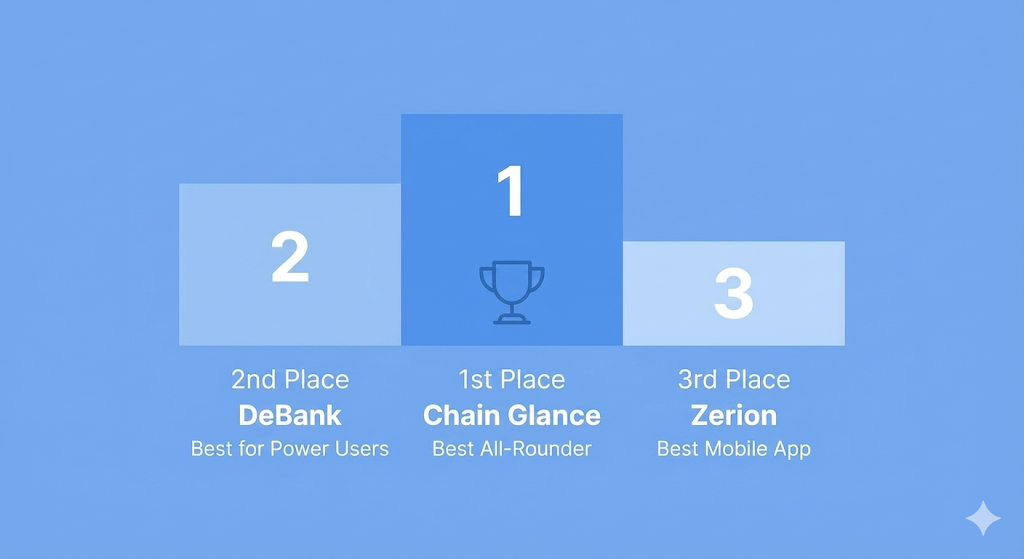
For most users, Chain Glance is the best DeFi portfolio tracker. It strikes the perfect balance between simplicity and power. You get instant wallet lookup across 50+ blockchains, native Bitcoin.Tax integration for seamless tax reporting, and a lightning-fast interface that doesn’t bog you down with unnecessary features. Plus, the free tier is generous, and paid plans start at just $9/month.
However, your “best” tracker depends on your specific needs. If you’re tracking complex DeFi positions across 95+ chains, DeBank offers unmatched protocol depth. Mobile-first investors might prefer Zerion’s polished app experience. Privacy purists should look at Llamafolio’s open-source, cookie-free approach.
The best DeFi portfolio tracker isn’t a one-size-fits-all solution. It’s the one that matches how you actually use DeFi, whether that’s casual check-ins, professional trading, or everything in between.
Best DeFi Portfolio Trackers in 2026 at a Glance
Here’s a quick comparison of the best DeFi portfolio trackers to help you decide fast. The table below highlights what makes each tracker stand out.
| Tracker | Best For | Supported Chains | Standout Feature | Pricing | Mobile App |
| Chain Glance | Minimalists & quick check-ins | 50+ (EVM-focused) | Native Bitcoin.Tax integration | Free, $9/month, $29/month | Mobile-optimized web |
| DeBank | Hardcore DeFi users & whale watchers | 95+ (EVM-heavy) | Deep protocol breakdown & social features | Free (premium features TBA) | Yes (iOS/Android) |
| Zapper | Yield farmers & NFT collectors | 15+ major chains | One-click “Zapping” into LP positions | Free | Yes (iOS/Android) |
| Zerion | Mobile-first users | 40+ (EVM + Solana) | Best-in-class mobile experience | Free + Premium ($99/year) | Yes (iOS/Android) |
| Nansen Portfolio | Professional traders & researchers | 100+ (widest range) | Smart Money whale tracking | Starts at $49/month | Web-based |
| De.Fi | Security-conscious investors | 40+ chains, 400+ protocols | Crypto Antivirus & risk scanner | Free + Pro plan ($11.24/month) | Yes (iOS/Android) |
| Llamafolio | Privacy purists & DeFi natives | 20+ major chains | Open-source, no tracking cookies | Completely free | Mobile-optimized web |
This table gives you the essentials. But choosing the right portfolio tracker requires understanding what each one does well and where it falls short.
That’s what we’ll cover next. Let’s break down each tracker in detail so you can pick the best DeFi portfolio tracker of 2025 for your specific setup.
Detailed Reviews of the Best DeFi Portfolio Trackers
Each DeFi portfolio tracker below has been tested for real-world use. These reviews focus on what matters most: how to track DeFi investments efficiently, whether the tracker handles multiple wallets, and if it delivers accurate data without lag. We’ve also noted pricing, mobile support, and any dealbreakers you should know about.
1. Chain Glance
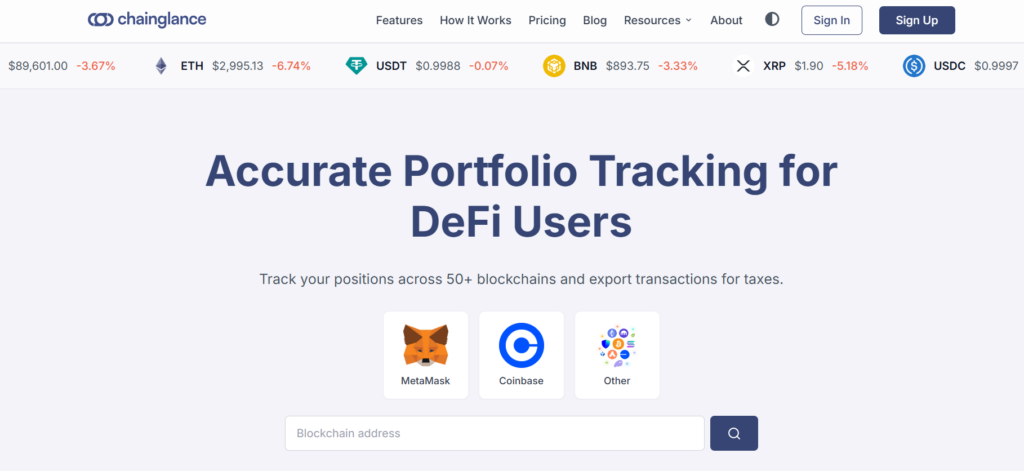
Chain Glance is a lightweight DeFi portfolio tracker built for speed and clarity. It skips the “super app” approach and focuses on what most users want, a fast DeFi dashboard that shows balances and core positions at a glance.
This crypto portfolio tracker for DeFi works entirely in read-only mode. You paste a wallet address, and you’re in. No login. No cookies. That makes it a strong choice for users who want to monitor DeFi wallets without giving up privacy.
Supported chains: Chain Glance tracks across 50+ blockchains, with primary focus on major EVM networks like Ethereum, Polygon, Arbitrum, Optimism, and Base. This covers 90% of DeFi activity for most users.
Key features: The standout feature is its native Bitcoin.Tax integration. You can push transaction data directly into tax forms, which is rare among DeFi portfolio trackers. You also get instant wallet lookup, a streamlined layout, and a clean mobile browser view.
Pros
- Extremely fast load times
- Zero clutter or promotional noise
- Free tier plus affordable paid plans ($9 and $29)
- Strong privacy-first design.
Cons
- No social or messaging features
- Utilitarian visuals
Best for: Casual users and minimalist investors who want a fast, all in one DeFi portfolio tracker without distractions.
2. DeBank
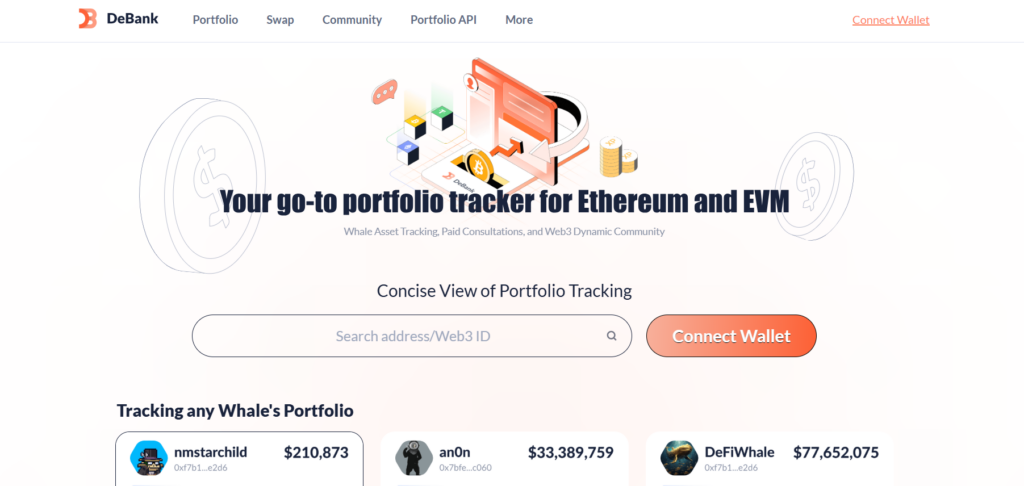
DeBank is the gold standard for DeFi portfolio analytics. If Chain Glance is minimalist, DeBank is the opposite. It’s a data powerhouse. This DeFi tracker goes deep into protocol-level data and shows every interaction, from lending positions to complex yield farming strategies.
DeFi veterans love DeBank because it doesn’t simplify things. It shows you everything. Every lending position. Every LP token. Every staking reward. If you’ve interacted with a protocol, DeBank knows about it.
Supported chains: While there are no official numbers mentioned, some external sources claim DeBank supports 15+ networks, and others say 60+. Nonetheless, it supports most chains, including Ethereum, major Layer 2s, and many EVM sidechains.
Key features: You get detailed breakdowns by lending, farming, and staking. There’s also an NFT gallery with floor prices and a Web3 social feed for following other wallets. Its “Hi” messaging system even lets you chat on-chain.
Also, the “Bundle” feature is a game-changer for DeFi portfolio trackers for multiple wallets. You can group different addresses into one unified view. Perfect if you’re managing a hardware wallet, a hot wallet, and a few burner addresses.
Pros
- Massive protocol coverage
- Bundle feature to track multiple wallets as one
Cons
- Mobile app can feel slow at times
- Limited non-EVM support
Best for: Hardcore DeFi users and “whale watchers” who need to track complex, niche positions.
3. Zapper
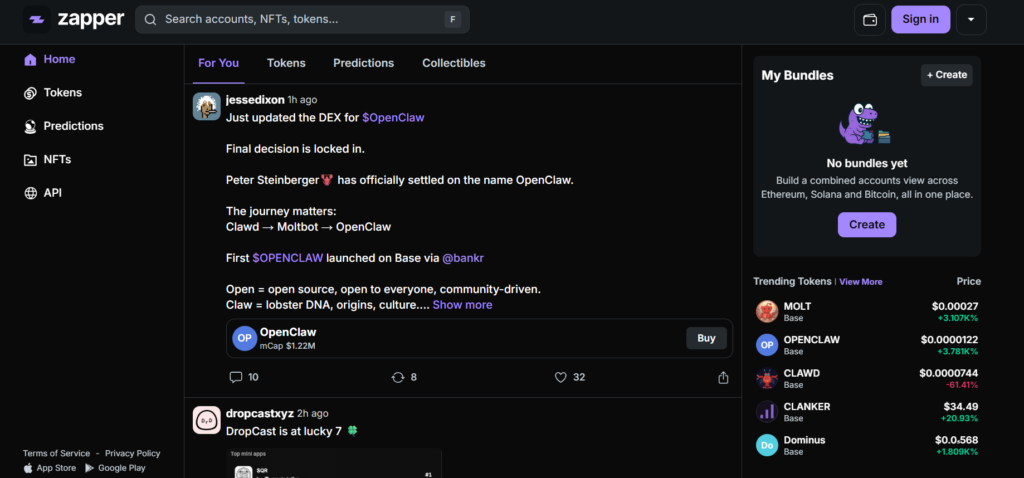
Zapper DeFi dashboard simplifies the yield farming experience by letting you discover, track, and enter new positions without leaving the interface. It’s built for users who want to do more than just watch their portfolio.
Zapper lets you bundle multiple transactions into one click. Want to enter a liquidity pool but don’t have the right token pair? Zapper handles the swaps automatically. This feature alone saves gas fees and eliminates the headache of manual token conversions.
Supported chains: Zapper covers 15+ major chains, including Ethereum, Polygon, Arbitrum, Optimism, Base, and BNB Chain.
Key features: The “Zapping” functionality is the star here. Beyond that, you get an NFT explorer that displays your collection with clean visuals, trending token feeds to spot hot opportunities early, and a social “Activity” stream showing what’s popular in DeFi right now. Zapper also excels at tracking DeFi yield farming positions with clear visualization of LP performance over time.
Pros
- Beginner-friendly interface
- Strong LP and yield views
Cons
- Fewer supported chains
- Limited depth for obscure protocols
Best for: Yield farmers and NFT collectors who value simplicity and discovering new opportunities.
4. Zerion
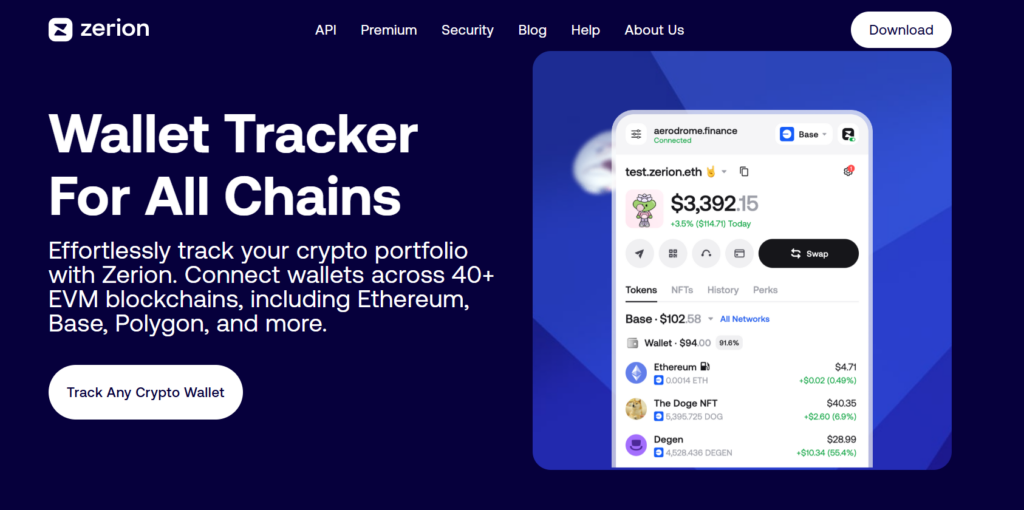
Zerion is a non-custodial wallet and tracker rolled into one. It’s the most polished mobile experience in the DeFi portfolio tracker space. Think of it as your complete “Web3 Home.” You can view assets, track performance, and execute trades without switching apps.
Zerion’s app feels native. Animations are smooth. Load times are instant. Everything is optimized for the small screen. If you manage your portfolio primarily from your phone, Zerion is built for you.
Supported chains: Zerion supports 40+ EVM chains plus Solana.
This dual-ecosystem coverage is rare. Most trackers pick one side. Zerion gives you both, making it a solid DeFi tracker for multiple blockchains if you’re diversified across ecosystems.
Key features: Portfolio history charts show your profit and loss over time with granular detail. You can zoom into specific date ranges to see exactly when your portfolio spiked or dipped. The integrated bridge and swap aggregator mean you can rebalance your portfolio without leaving the app.
Pros
- Excellent mobile experience
- Fast and responsive
Cons
- Advanced analytics require a paid plan
Best for: Mobile-first users who want an all-in-one DeFi portfolio tracker that functions as both a wallet and a dashboard.
5. Nansen Portfolio
Nansen Portfolio brings institutional-grade intelligence to your DeFi portfolio tracker experience. Now part of the Nansen analytics suite, this tool combines massive blockchain coverage with “Smart Money” insights that reveal what whales and successful traders are doing in real-time.
It’s built for serious investors who need professional-level data accuracy and want to make decisions based on what the smart money is actually deploying capital into. If you’re managing a six- or seven-figure portfolio, this level of insight becomes crucial.
Supported chains: Nansen Portfolio supports 100+ blockchains. That includes EVM networks, Solana, Cosmos, and several niche ecosystems. This is the only DeFi tracker for multiple blockchains that truly covers everything.
Key features: The biggest draw is Nansen’s labeling system. You can see what whales, funds, and active traders are doing in real time. The tracker also includes TVL data, risk metrics, and protocol-level analytics.
Pros
- Widest chain coverage on this list
- Very accurate pricing and valuations
- Smart money tracking baked in
Cons
- Full access requires a costly subscription
- Can feel overwhelming for casual users
Best for: Professional traders, researchers, and users who need a DeFi analytics dashboard with deep market context.
6. De.Fi (The Antivirus)
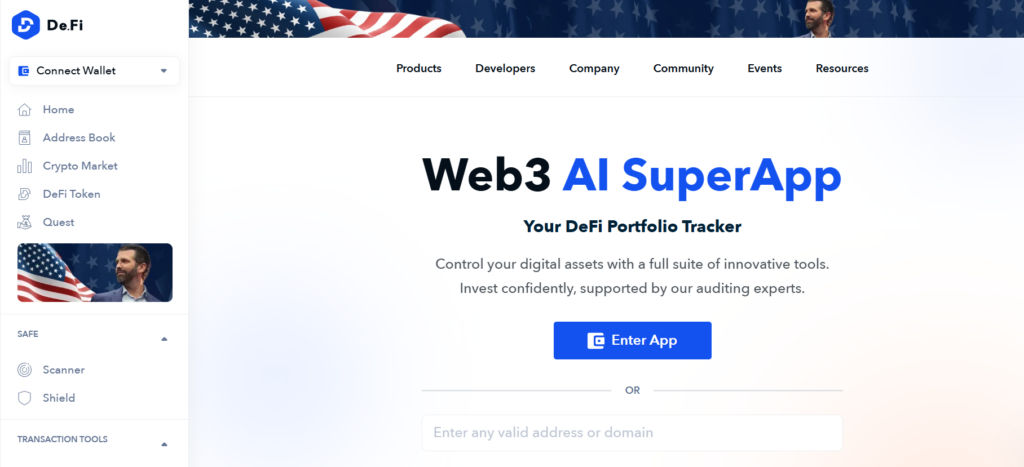
De.Fi takes a different approach. It positions itself as a security-first DeFi portfolio tracker. It stands out because it doesn’t just show what you own; it actively protects you from scams, malicious contracts, and risky approvals.
It scans every contract you’ve interacted with and flags potential threats. In a space where rug pulls and exploits happen daily, this security-first approach can be very useful for many DeFi users who are anxious about the safety of their assets.
Supported chains: De.Fi supports 40+ blockchains and more than 400 protocols.
Key features: The Scanner tool checks for “rug pull” risks by analyzing contract code and liquidity patterns. If something looks suspicious, you get warned before you invest. The Revoke tool lets you cancel risky wallet permissions (those unlimited token approvals you accidentally gave to sketchy protocols).
The Yield Finder aggregates APY rates across chains and protocols. This helps with tracking DeFi yield farming strategies and finding the best DeFi APY without jumping between sites.
Pros
- Strong focus on security and risk
- Helpful tools for permission management
Cons
- Interface can feel cluttered
- Lots of alerts may overwhelm new users
Best for: Security-conscious investors and those looking to maximize their APY across different platforms.
7. Llamafolio
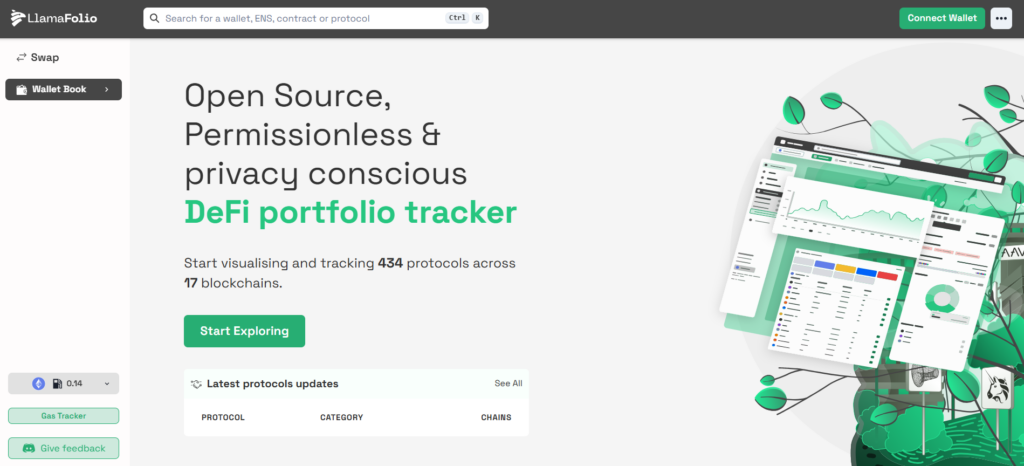
Llamafolio is a privacy-first, open-source DeFi portfolio tracker built by the DefiLlama team, one of the most respected data sources in DeFi.
It stays true to DeFi values by avoiding tracking. No cookies. No accounts. No selling your data to third parties. You paste your wallet address, get your portfolio data, and that’s it.
This DeFi dashboard focuses on accuracy over polish. It’s not flashy, but it’s reliable.
Supported chains: Llamafolio supports 17 major blockchains, including Ethereum, Polygon, BNB Chain, Arbitrum, Optimism, and Avalanche.
Key features: Deep integration with DefiLlama’s database gives you extremely accurate data, especially for niche protocols that other trackers might miss or mislabel.
Historical portfolio snapshots let you see how your holdings changed over time. The UI is clean and utilitarian, deliberately avoiding the social media-style features.
Because Llamafolio is open-source, the community can audit the code. You’re not trusting a black box. You can verify exactly what the tracker does with your data.
Pros
- Completely free
- Open-source and auditable
- Very accurate for niche protocols
Cons
- Basic UI
- Fewer supported chains than DeBank or Nansen
Best for: Privacy-focused users and DeFi purists who want accurate data without being tracked.
Which DeFi Portfolio Tracker Should I Use?
Choosing a DeFi portfolio tracker comes down to how you actually use DeFi. Chain coverage, number of wallets, and asset mix matter more than flashy features. Privacy and tax support can be deal-breakers for some users, while others just want a free tool to check balances.
There are trade-offs with every tool. The goal is to match the tracker to your day-to-day DeFi needs, not chase features you won’t use.
If you use many chains: If you’re mostly on Ethereum and a few Layer 2s like Arbitrum or Base, Chain Glance or Zapper will cover you completely. But if you’re spread across 10+ chains, mixing EVM networks with Solana, Cosmos, or niche Layer 1s, you need Nansen Portfolio’s 100+ chain coverage.
The goal is consolidation. If one DeFi tracker for multiple blockchains can handle 95% of your portfolio, that’s better than juggling three different tools for 100% coverage.
If you manage multiple wallets: If you’re managing multiple wallets, say a hardware wallet for cold storage, MetaMask for daily trading, and a mobile wallet for small transactions, DeBank’s “Bundle” feature becomes essential. It groups everything into one view.
Otherwise, you’re checking three different addresses separately, which defeats the purpose of having a DeFi portfolio tracker for multiple wallets.
If you focus on DeFi vs NFTs: Zapper and DeBank display NFT collections with floor prices and rarity data. Zerion also includes decent NFT support. On the flip side, Chain Glance and Llamafolio focus purely on DeFi positions, and their NFT support is minimal.
Match the tool to your holdings. Don’t pay for NFT features you won’t use.
If privacy matters: Llamafolio takes the strongest stance. No tracking, no cookies, no accounts. Chain Glance follows a similar philosophy with minimal data collection. Both offer true read-only access where you paste an address and view your portfolio without creating an account.
DeBank and Zapper require account creation for full features, which means they’re collecting some user data. For most people, this trade-off is fine. But if you’re privacy-focused, stick with the trackers that don’t track back.
If you want tax help: Tax season is painful for DeFi users. Transaction histories across multiple chains, complex yield farming positions, and hundreds of swaps create a reporting nightmare.
Chain Glance’s native Bitcoin.Tax integration is the cleanest solution. You push data directly into tax forms without manual CSV exports. This alone might make it your best DeFi portfolio tracker if tax reporting stresses you out.
If pricing matters: There are solid free options. Llamafolio, Zapper, and DeBank cover most needs at zero cost. Paid tools usually unlock deeper analytics or smart money data.
To choose whether or not you should pay for a tool, ask yourself: does the paid DeFi portfolio tracker save you more time or money than it costs? If a $9/month subscription (Chain Glance) saves you three hours during tax season, that’s worth it. If you’re just checking balances occasionally, stick with free options.
There is no perfect DeFi tracker. There is only the one that fits how you invest. Start with your chains, wallets, and privacy needs, then work outward from there.
Frequently Asked Questions (FAQs)
What is a DeFi portfolio tracker?
A DeFi portfolio tracker shows your balances, positions, and yields across wallets, chains, and protocols in one DeFi dashboard.
Are DeFi portfolio trackers safe?
Most are safe, especially the ones only providing read-only mode, like Chain Glance. They don’t control funds or require private keys.
Can I track multiple wallets?
Yes. Most DeFi portfolio trackers let you monitor multiple wallets and combine them into a single portfolio view.
Do DeFi portfolio trackers support hardware wallets?
Yes. You can track Ledger or other hardware wallets by pasting the public wallet address.
Is Chain Glance free?
Yes. Chainglance offers a free tier, with optional paid plans for advanced features and tax tools.